What is Breaststroke? A Biomechanical Masterpiece
Breaststroke is one of the four competitive swimming strokes, alongside Freestyle (Front Crawl), Backstroke, and Butterfly. Known for its distinct frog-like movements, it is the oldest competitive stroke and is widely taught as the first major swimming milestone.
At **Swim For Life Vietnam**, we always teach breaststroke as the foundational stroke for beginners. Its symmetrical movement pattern makes it easier for the nervous system to coordinate. More importantly, it allows swimmers to look forward and breathe naturally on every stroke cycle, significantly reducing water anxiety.
According to coach Nguyen Huy Manh, Director of Swim For Life: "Breaststroke serves as the gateway to water confidence. When a student masters the glide and breathing rhythm of breaststroke, their water comfort skyrockets, making it simple to pick up freestyle, backstroke, or survival skills."
Breaststroke is highly functional. It is a fantastic full-body workout that engages the core, legs, and back, and acts as a vital survival skill. When paired with treading water, it forms the bedrock of personal water safety.
Health and Fitness Benefits of Breaststroke
Regular breaststroke training provides remarkable physical and mental benefits:
Physical Health
- Low-Impact Joint Therapy: Due to water buoyancy, breaststroke places virtually zero impact on your weight-bearing joints, making it highly recommended for recovery and senior fitness.
- Full-Body Muscle Toning: Unlike other strokes that rely heavily on the upper body, breaststroke gets 70% of its power from the legs. It targets the inner thighs, glutes, core, chest, and upper back.
- Aerobic Efficiency: Swimming at a steady pace burns 400-600 calories per hour, improving cardiovascular endurance and lung capacity.
Mental Well-being
- Stress Relief: The rhythmic breathing and sound of water create a calming, meditative effect, lowering cortisol levels.
- Buoyancy Control: Learning to hold the glide phase teaches the body natural floatation, boosting overall comfort and safety in deep water.
The Leg Kick: Draw, Whip, and Squeeze
The breaststroke kick (whip kick) is the primary propulsion source, driving the swimmer forward. It consists of four distinct phases:
1. The Draw (Leg Recovery)
Start with legs straight. Gently draw your heels toward your buttocks by bending at the knees. Keep knees hip-width apart; do not splay them wide as this creates huge drag.
2. The Flex (Catch Setup)
Once heels are close to the glutes, flex your ankles outward at 90 degrees. Your toes must point outward, exposing the soles of your feet to push the water backward.
3. The Whip (Propulsion)
Accelerate your feet backward and outward in a circular path. Use the soles of your feet and inner shins to push the water away, driving yourself forward.
4. The Squeeze & Glide
Snap your legs together until they are fully extended and touching. This "squeezing" motion traps water between your legs, generating an extra burst of speed. Hold this shape to glide.
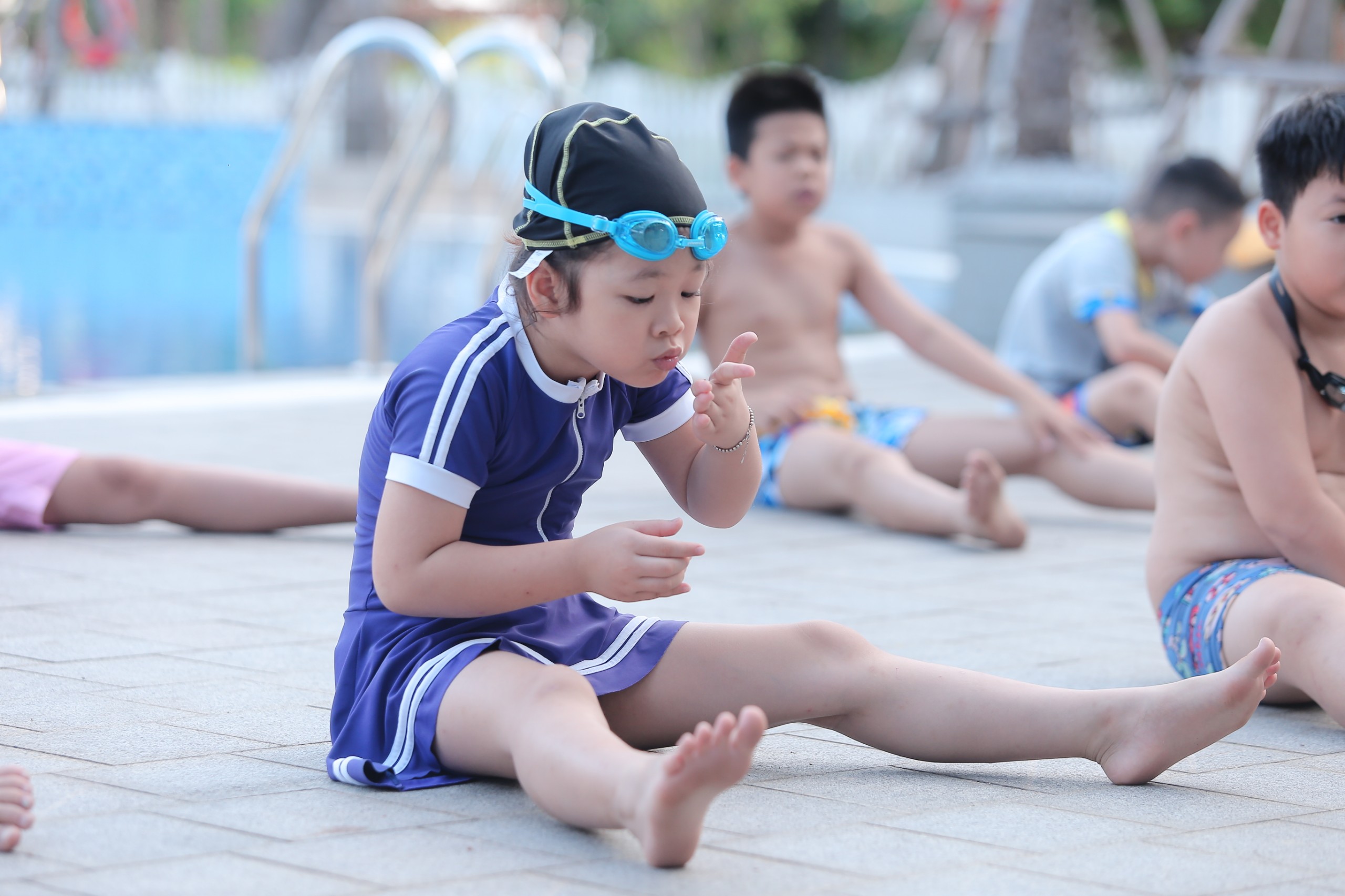
The Arm Pull: Sweep, Squeeze, and Extend
The arm pull provides about 30% of breaststroke propulsion and helps lift the mouth out of the water to breathe. It follows a tight, heart-shaped path:
1. Outward Sweep (Catch)
Start with arms extended forward, palms facing down. Rotate hands outward at a 45-degree angle and sweep them apart slightly wider than shoulder-width, catching the water.
2. Inward Sweep (Pull)
Bend elbows and pull hands downward and inward toward the chest. Keep elbows high and hands moving fast to create lift. Do not sweep hands past your shoulders.
3. Recovery (Extend)
Squeeze your elbows close to your ribs and bring hands together under your chin. Immediately shoot hands forward back into a streamlined position to minimize drag.
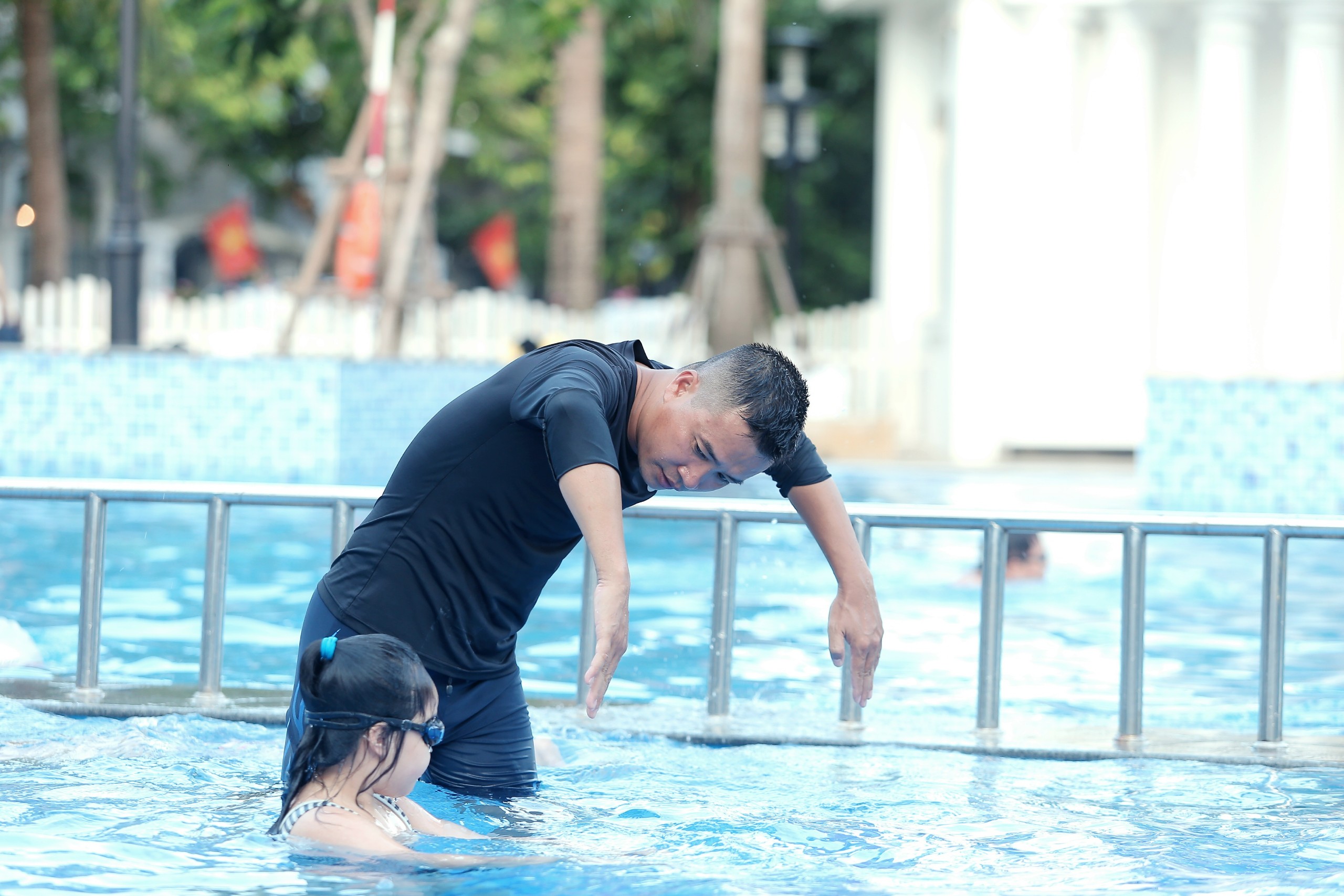
Breathing Technique and Rhythm
Breathing must be synchronized with the arm pull. The rule is simple: **Inhale through the mouth when head rises, exhale through the nose underwater.**
The Breathing Cycle:
- As arms sweep inward, the lift raises your chin above water. Open your mouth and take a quick, deep breath.
- As hands shoot forward and face enters the water, begin blowing bubbles (exhaling through your nose).
- Continue exhaling slowly throughout the glide phase. Ensure lungs are empty before the next breath.
Full Stroke Coordination: Pull, Breathe, Kick, Glide
Timing is everything in breaststroke. The movements of arms and legs must alternate. The formula is: **Pull & Breathe -> Recover & Kick -> Squeeze & Glide.**
| Phase | Arm Action | Leg Action | Breathing |
|---|---|---|---|
| 1. Pull & Breathe | Outward and inward sweep | Straight and relaxed | Lifting head to inhale |
| 2. Recover & Kick Setup | Hands shoot forward | Heels draw in, ankles flex | Face enters, start exhale |
| 3. The Kick | Fully extended forward | Whip backward & squeeze | Exhaling under water |
| 4. The Glide | Fully extended forward | Extended together | Slow exhale, glide 1-2s |
Dryland Exercises for Breaststroke
Before jumping in the pool, build muscle memory with these exercises:
- Heel-to-Glute Whip Kick: Lie face down on a bench, draw heels toward glutes, flex ankles, and kick. Focus on keeping knees narrow.
- Heart-Shape Arm Sweep: Stand tall, lean forward 45 degrees, and practice the arm sweep. Ensure elbows stay high and hands recover quickly.
- Core Plank: Hold a 60-second plank to strengthen the muscles that keep your hips high in the water.
Pool Drills for Skill Building
Practice these drills in shallow water to lock in your form:
- Wall Kick Drill: Hold the pool gutter, extend your body, and practice the whip kick. Focus on pushing water with your soles.
- Kickboard Glide: Hold a kickboard and practice kicking. Inhale by lifting your head, then submerge your face to exhale.
- Pull Buoy Arm Drill: Place a pull buoy between your thighs to immobilize your legs. Focus purely on arm pulls and breathing rhythm.
Professional Breaststroke Lessons at Swim For Life
Whether you are a beginner looking to overcome water anxiety or want to refine your form, Swim For Life offers premium 1-on-1 private coaching across Hanoi and Ho Chi Minh City.
Why Train with Us?
- 1-on-1 Private Coach: Sourcing coaches from physical education universities. 100% attention in the water.
- Guaranteed Results: We guarantee you will swim breaststroke confidently within 10-12 sessions.
- Flexible Locations: Learn at a high-end four-season pool near your home or workplace.